

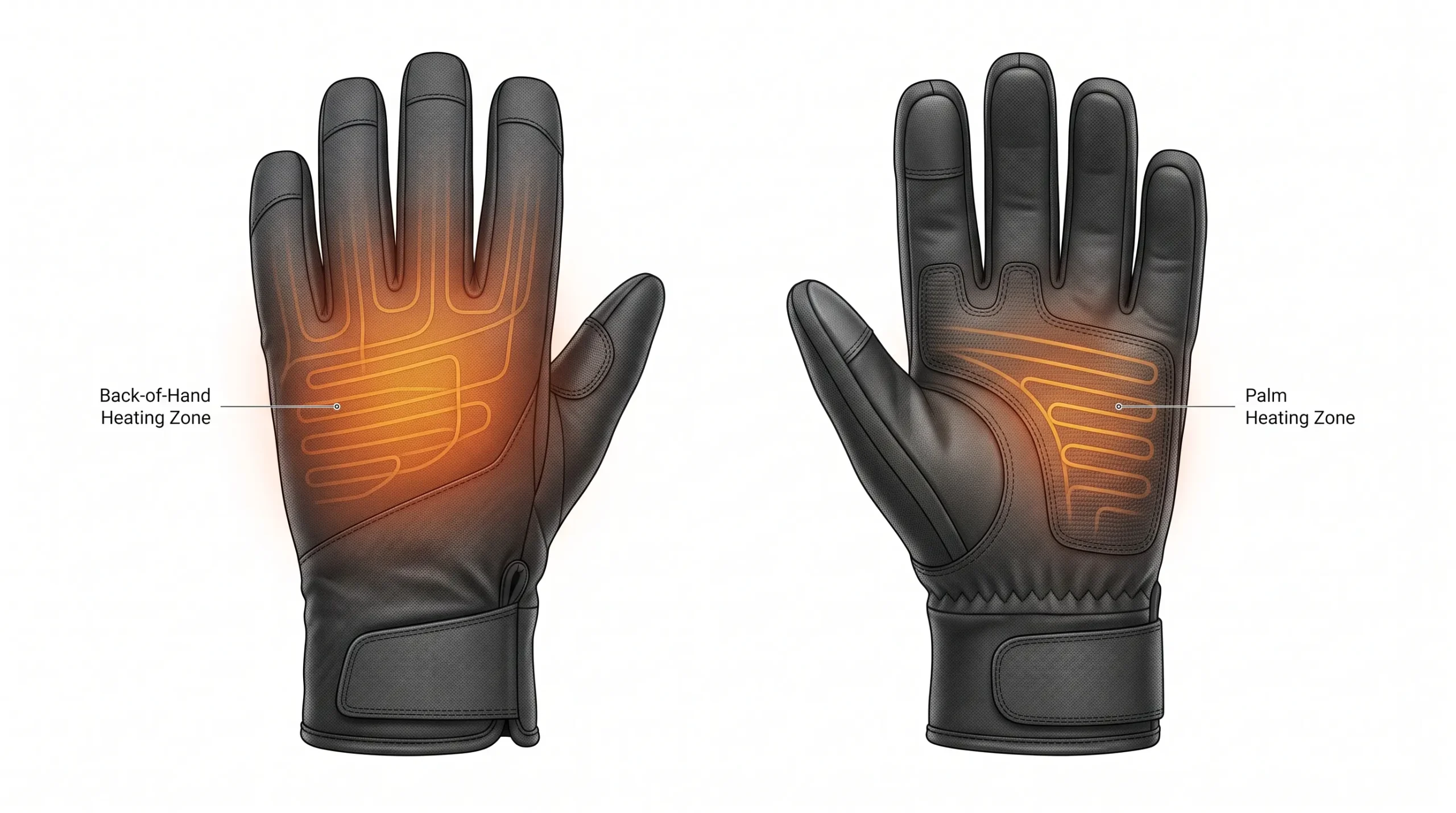
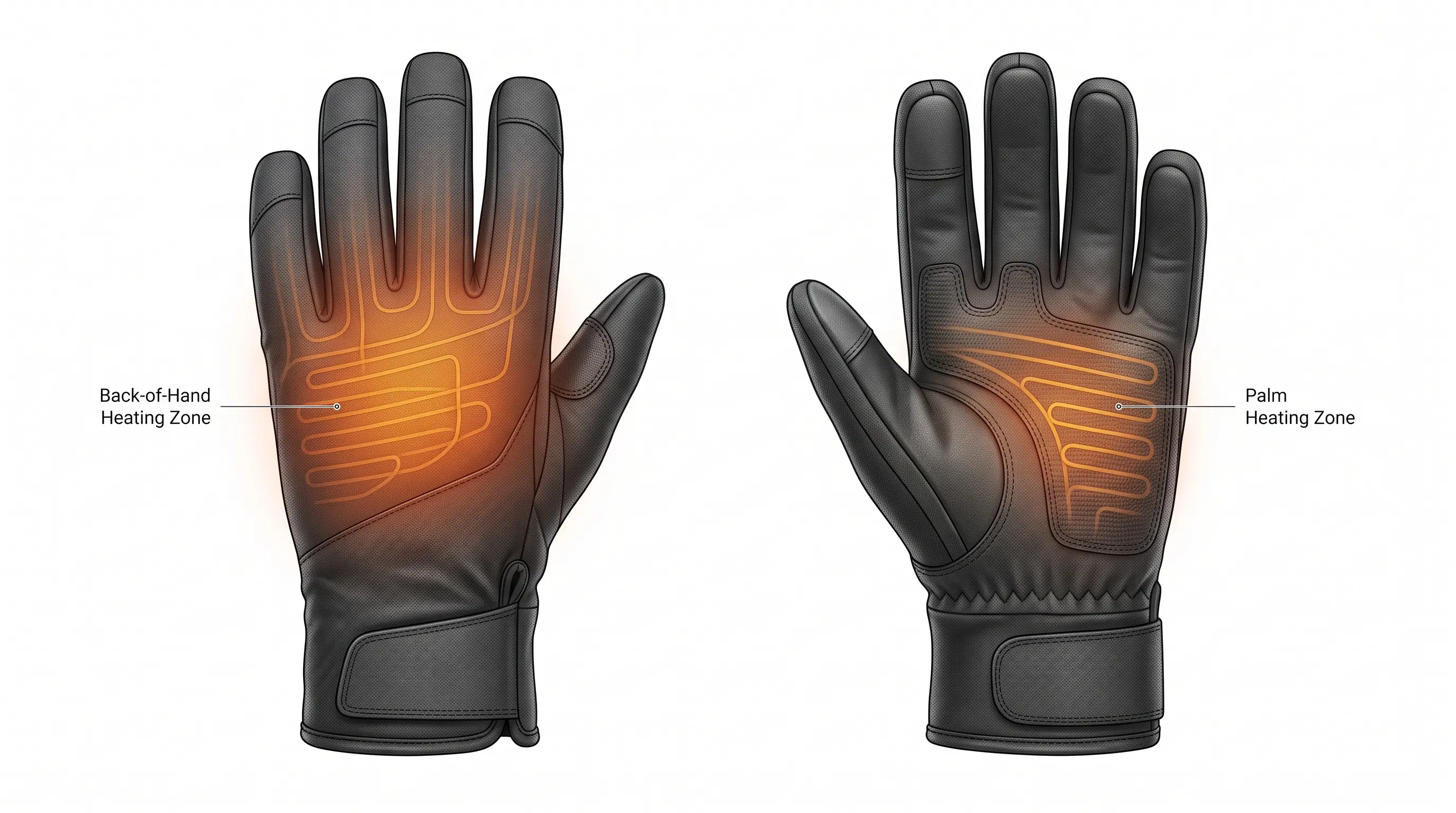
When designing palm and back heated gloves, adding more heating elements is not the only challenge. The key is understanding how different areas of the hand interact with the environment and how heat should be delivered through the glove structure.
The palm and the back of the hand represent two different heating environments. The palm is involved in gripping and contact activities, while the back of the hand is more exposed to cold air and environmental heat loss. Effective heated glove design requires different engineering approaches for each area. This builds on the earlier discussion of why Raynaud’s hands need continuous heat, which looks at why steady warmth matters for cold-sensitive hands.
Why Palm and Back-of-Hand Heating Require Different Designs
The hand is not a uniform heating surface. Different areas experience different levels of movement, exposure, and heat transfer conditions.
The palm frequently interacts with objects, tools, and surfaces. The back of the hand usually has less direct contact and is more affected by surrounding temperature and airflow.
For heated glove manufacturers, this means heating design cannot rely on a single approach. Heating placement, material selection, insulation structure, and power management must work together to create a balanced warming system.
Palm Heating: Balancing Warmth and Hand Function
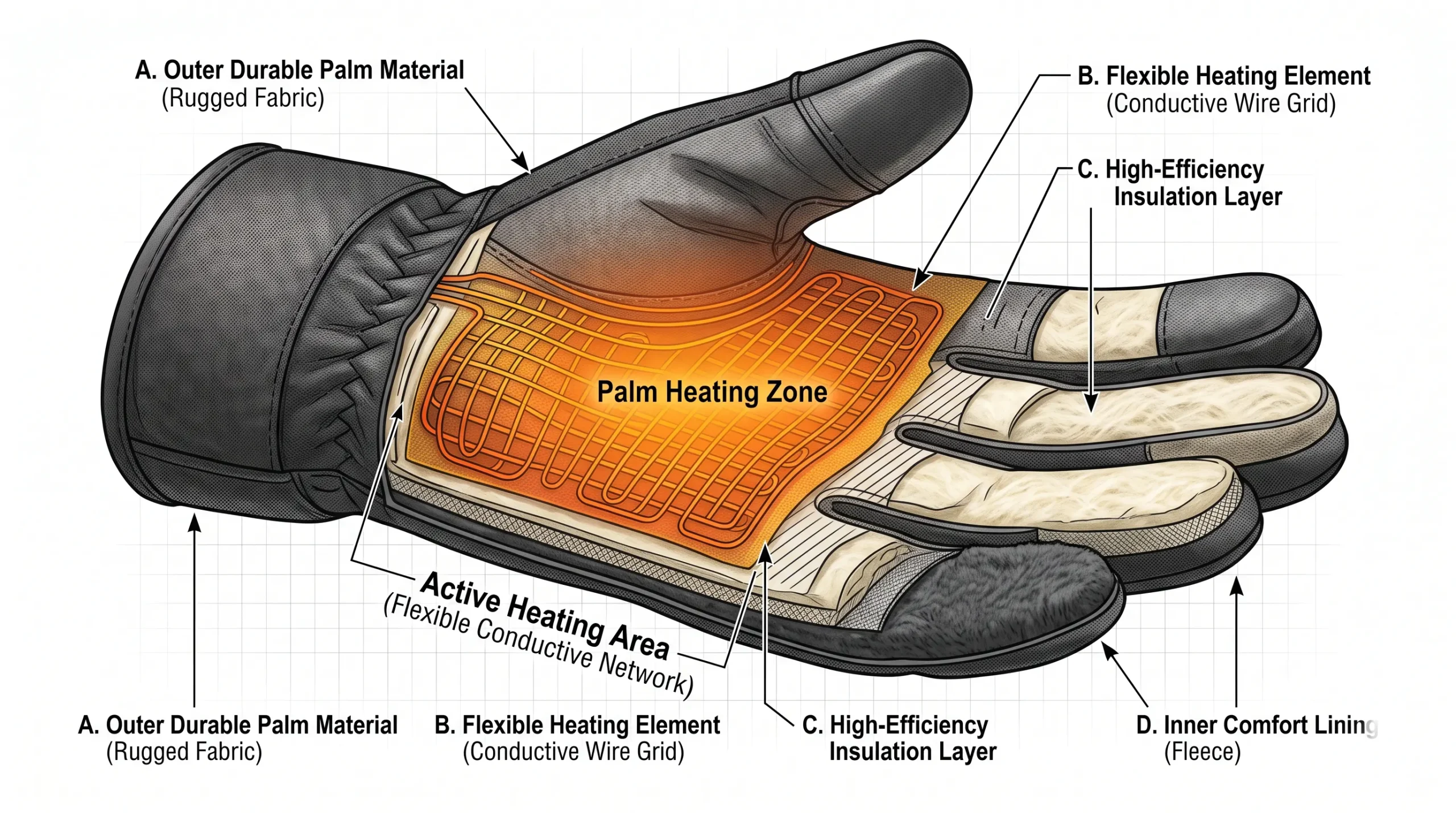
Palm heating focuses on providing warmth while maintaining natural hand movement and grip ability.
The heating structure needs to remain flexible because the palm is constantly involved in activities such as holding, carrying, and operating objects.
Important engineering considerations include:
- Flexible heating elements that follow hand movement
- Comfortable integration with glove materials
- Balanced heat distribution without uncomfortable hot spots
- Durable construction for repeated gripping activities
A well-designed palm heating system must provide warmth without reducing dexterity or changing how the glove functions during everyday use.
Back-of-Hand Heating: Managing Environmental Heat Loss
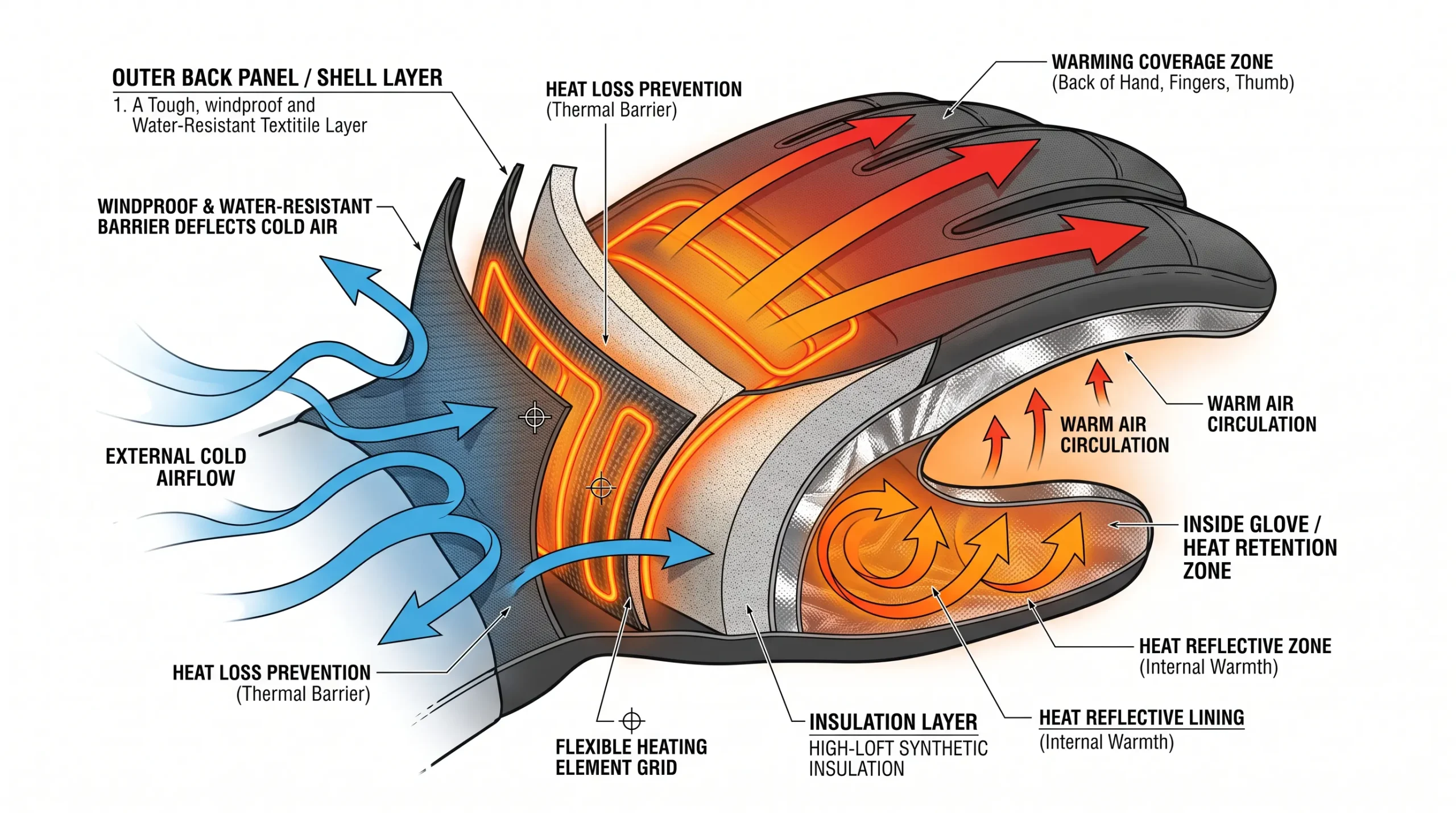
The back of the hand faces a different engineering challenge because it is more exposed to the surrounding environment.
Cold air movement, wind, and outdoor temperature changes can increase heat loss from exposed surfaces. The National Institute for Occupational Safety and Health (NIOSH) notes that cold exposure risk is influenced by environmental conditions, wind, clothing insulation, and duration of exposure.
For this reason, back-of-hand heating often focuses on maintaining a stable warming layer across a larger exposed area.
Key considerations include:
- Coverage across exposed hand surfaces
- Consistent heat distribution
- Integration with insulation materials
- Protection against environmental heat loss
Why Balanced Heating Coverage Matters
A heated glove does not perform through the heating element alone. The final warming experience depends on the relationship between heating zones, insulation, materials, and glove construction.
Adding more heating areas does not automatically create a better system. More heating coverage also affects battery requirements, electrical design, flexibility, and overall comfort.
Effective heated glove engineering requires balancing:
- Heating zone placement
- Heat distribution efficiency
- Battery consumption
- Glove flexibility
- Long-term durability
How sustained versus peak output is managed is covered in Stable Heat vs Peak Heat: Why Sustained Output Matters More.
How Manufacturers Design Different Heating Zones
For heated wearable manufacturers, heating zone design requires balancing thermal performance with electrical integration, glove patterns, material structures, and long-term reliability.
The heating system must function as part of the entire glove design rather than as an isolated component.
During development, manufacturers evaluate:
- Heating element placement
- Wire routing and electrical reliability
- Material compatibility
- Power management requirements
- User movement and comfort
The goal is not simply creating higher heat output, but designing a practical relationship between warmth, comfort, battery life, and durability.
Element placement trade-offs are explored in How Heating Element Placement Shapes Flexibility and Coverage.
The Role of Materials and Insulation
Heating elements generate warmth, but insulation determines how effectively that warmth is maintained.
Materials around heating zones influence how heat spreads through the glove structure. A combination of heating technology and insulation design helps reduce unnecessary heat loss and improve overall efficiency.
This is why heated glove development involves both thermal engineering and material engineering.
What This Means for Heated Glove Design
Palm heating and back-of-hand heating should not be viewed as competing approaches. They solve different engineering problems.
The palm requires flexibility and durability for interaction. The back of the hand requires coverage and protection against environmental heat loss.
A complete heated glove system considers both areas together, creating a more balanced approach to warmth management.
Frequently Asked Questions
Is palm heating more important than back-of-hand heating?
Neither area is universally more important. Palm and back-of-hand heating address different conditions. The ideal heating design depends on activity level, environment, and how the glove is used.
Why do some heated gloves only heat the back of the hand?
Back-of-hand heating can provide broad coverage over an exposed area while allowing more space for grip and movement on the palm side. This design choice depends on intended use and construction requirements.
Does more heating coverage always mean warmer gloves?
Not necessarily. Heating performance depends on the combination of heating zones, insulation, materials, battery output, and glove structure.
Why don’t all heated gloves use the same heating layout?
Different glove applications require different balances between warmth, flexibility, battery consumption, and durability. Heating layouts are designed according to the intended use environment and user activity.
Why do heated gloves need different heating zones?
Different hand areas experience different levels of exposure, movement, and heat loss. Separate heating zones allow manufacturers to design more balanced warming systems.
Medical note: This article provides general educational information about Raynaud’s and cold-sensitive hands and is not intended to diagnose, treat, or replace professional medical advice.