

When people ask how heated gloves work, they often look first at the highest temperature a heating element can reach. From an engineering perspective, that number describes only one part of the system.
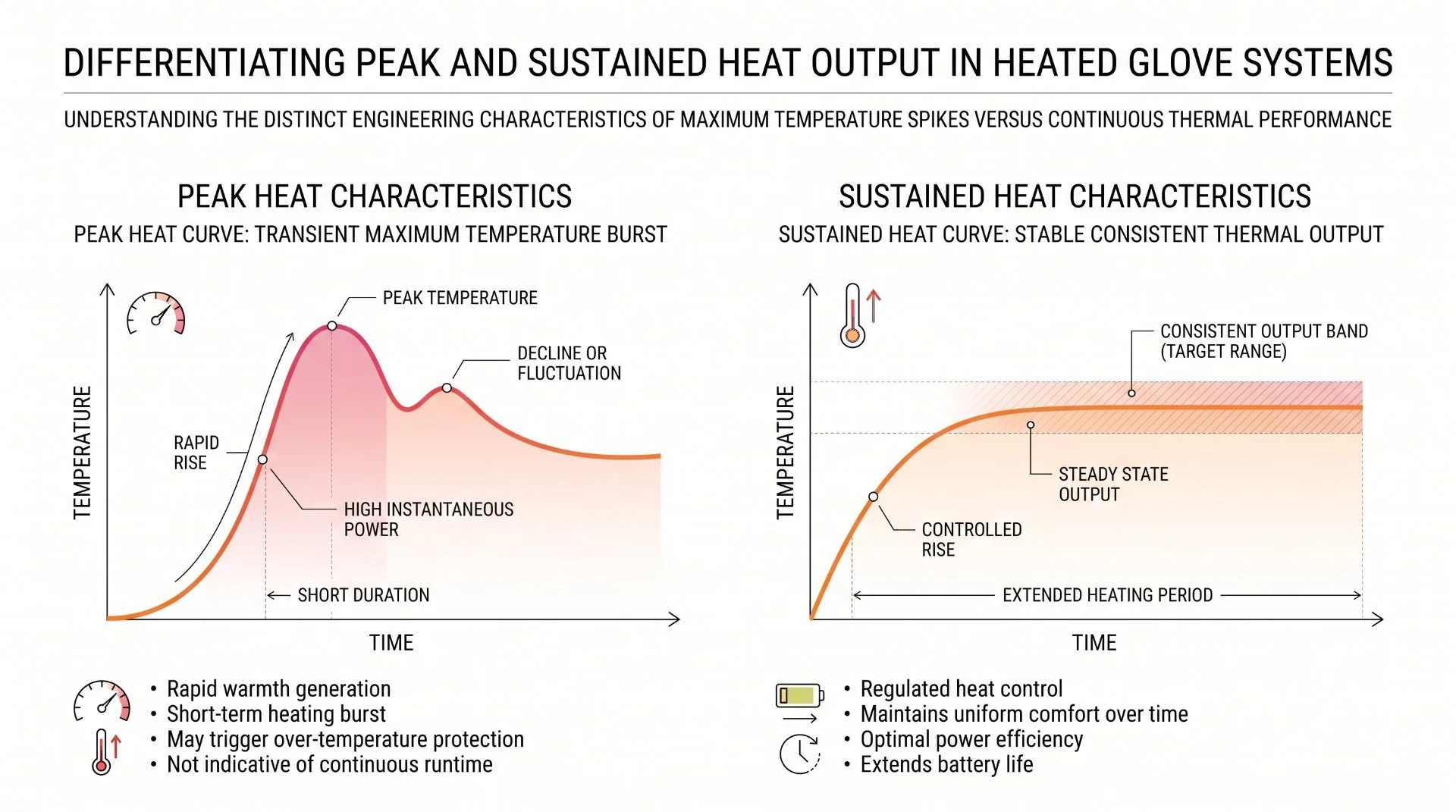
Peak temperature tells you how hot a heating element or surface becomes under a particular condition. Sustained heat output describes how consistently the system can deliver thermal energy over time.
For extended cold exposure, sustained and controlled output can therefore be a more useful engineering consideration than peak temperature alone. This does not mean peak temperature is unimportant; its relevance depends on the intended operating conditions and use case.
Peak Temperature and Heat Output Are Not the Same Thing
Temperature and heat transfer describe different properties.
Temperature describes the thermal state of a component or surface. Heat transfer describes the movement of thermal energy between materials or through an environment. Heat can be transferred through conduction, convection, and radiation.
A heating element can therefore reach a high surface temperature without that temperature alone describing how much thermal energy the complete glove system delivers to the hand over time.
For a heated wearable, a maximum-temperature specification should consequently be viewed as one operating characteristic rather than a complete description of heating performance.
For a broader explanation of how the heated area and passive insulation interact, see Heating Coverage vs Insulation: What Determines Hand Warmth.
Why a Short Heat Peak Does Not Define the Whole System
Consider two heating systems that reach a similar maximum temperature under a particular test condition. That does not mean they will provide the same thermal performance during extended use.
One system may reach its maximum quickly and then reduce its output as thermal conditions change. Another may operate at a lower temperature while maintaining a more consistent thermal output for a longer period.
The practical behavior of the system depends on how heat is generated, transferred, retained, and regulated over time.
This is why manufacturers need to distinguish between a peak operating point and the usable thermal output maintained during the target operating period.
Heating coverage is also part of this system. Different hand areas can experience different thermal loads, which is why zone placement can become an engineering consideration rather than simply a feature choice. See Palm vs Back-of-Hand Heating: Two Different Engineering Problems.
What “Stable Heat” Means in a Heating System
Stable heat does not simply mean using a stronger heating element.
In a wearable heating system, thermal stability is a system-level characteristic. The heating element, power source, control strategy, glove materials, insulation, and surrounding environment can all affect the resulting thermal behavior.
A system may need to respond to changes such as:
- Surrounding temperature
- Air movement and wind
- Contact with colder objects
- User movement
- Changes in heat transfer through the glove structure
- Changes in available electrical power
The objective is not necessarily to hold one surface temperature under every condition. It is to deliver an appropriate and controlled thermal output for the intended operating conditions.
Why Changing Thermal Load Matters
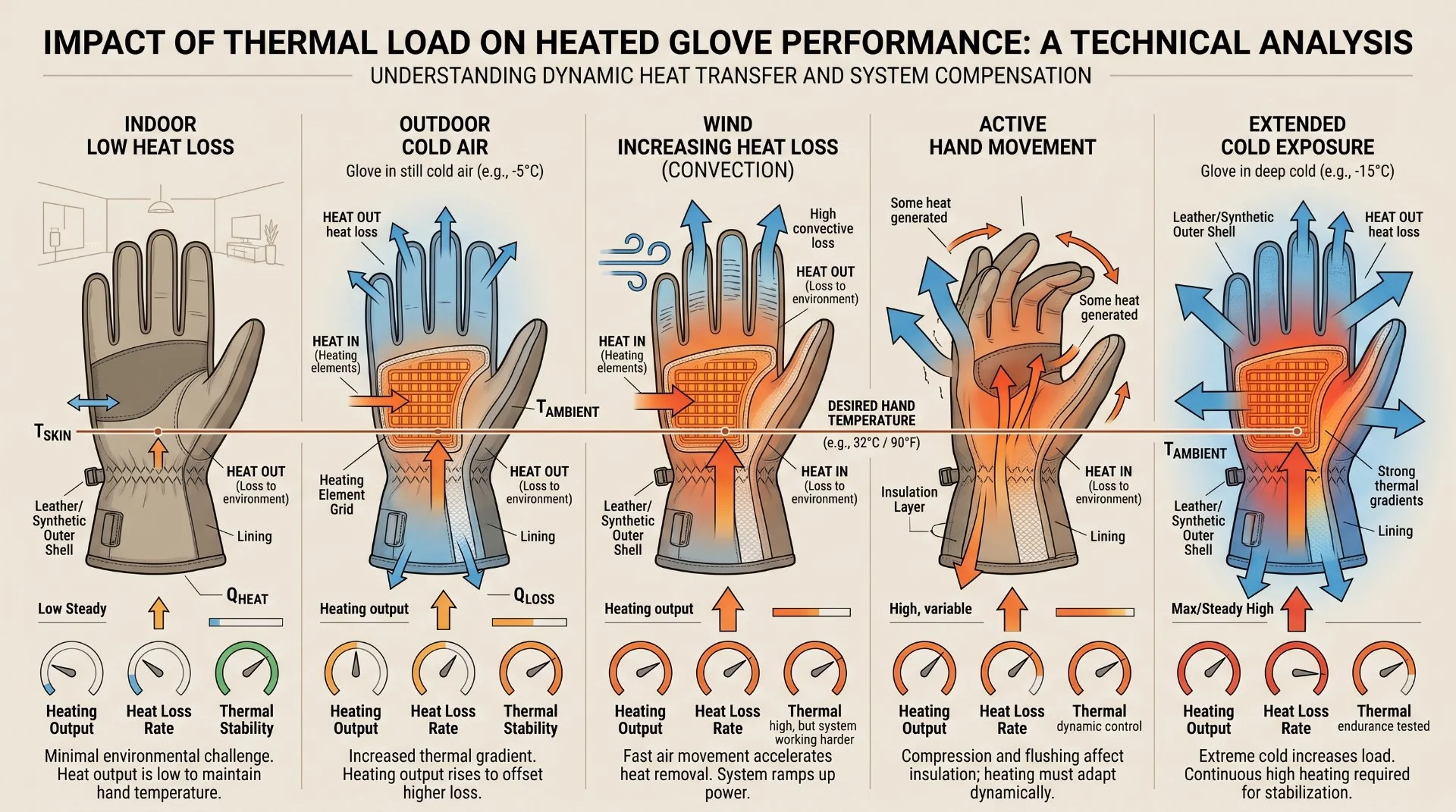
A heated glove that performs well in still air may behave differently when the wearer moves outdoors.
Air movement can alter convective heat transfer, while contact with a colder object can change the rate at which heat leaves the glove. The glove’s insulation and material structure also influence thermal resistance and heat flow.
Thermal resistance and thermal conductivity are important engineering properties because they influence how heat moves through materials and constructions.
These factors mean that heating performance cannot be fully understood from a single static temperature measurement.
For engineering evaluation, a more useful question is not simply “How hot can it get?” but “How does the system respond when the thermal load changes?”
Temperature Control Is Only One Part of Thermal Stability
A heating system operates within a range of thermal conditions rather than at one permanent temperature.
The control system influences how electrical energy is delivered to the heating element, but it is only one part of the thermal system. Power delivery, heating-element characteristics, insulation, materials, heat-transfer paths, and environmental conditions also affect the resulting temperature and heat flow.
This creates an important engineering relationship:
- Heating element: converts electrical energy into thermal energy
- Power system: supplies electrical energy to the heating system
- Control system: regulates the delivery of electrical power according to the system design
- Glove structure: influences how generated heat is transferred and retained
- Environment: determines part of the thermal load imposed on the system
These components work together. The heating element alone does not define the performance of the complete wearable heating system.
Why Sustained Output Can Matter More During Extended Cold Exposure
For extended cold exposure, the duration of thermal delivery becomes an important engineering consideration.
A brief peak can be useful during a warm-up phase or under particular operating conditions. However, it does not describe what the system can maintain during a longer operating period.
For this reason, sustained output can be more informative than peak temperature alone when evaluating a heating system intended for continuous use.
The comparison is therefore not “peak temperature is bad and stable heat is good.” The more accurate distinction is that peak temperature and sustained output answer different engineering questions.
For cold-sensitive users in particular, the hand needs continuous rather than intermittent warming, which is why the requirement is sustained output rather than a higher peak. See Why Raynaud’s Hands Need Continuous Heat.
Stable Heat Is a System-Level Engineering Problem
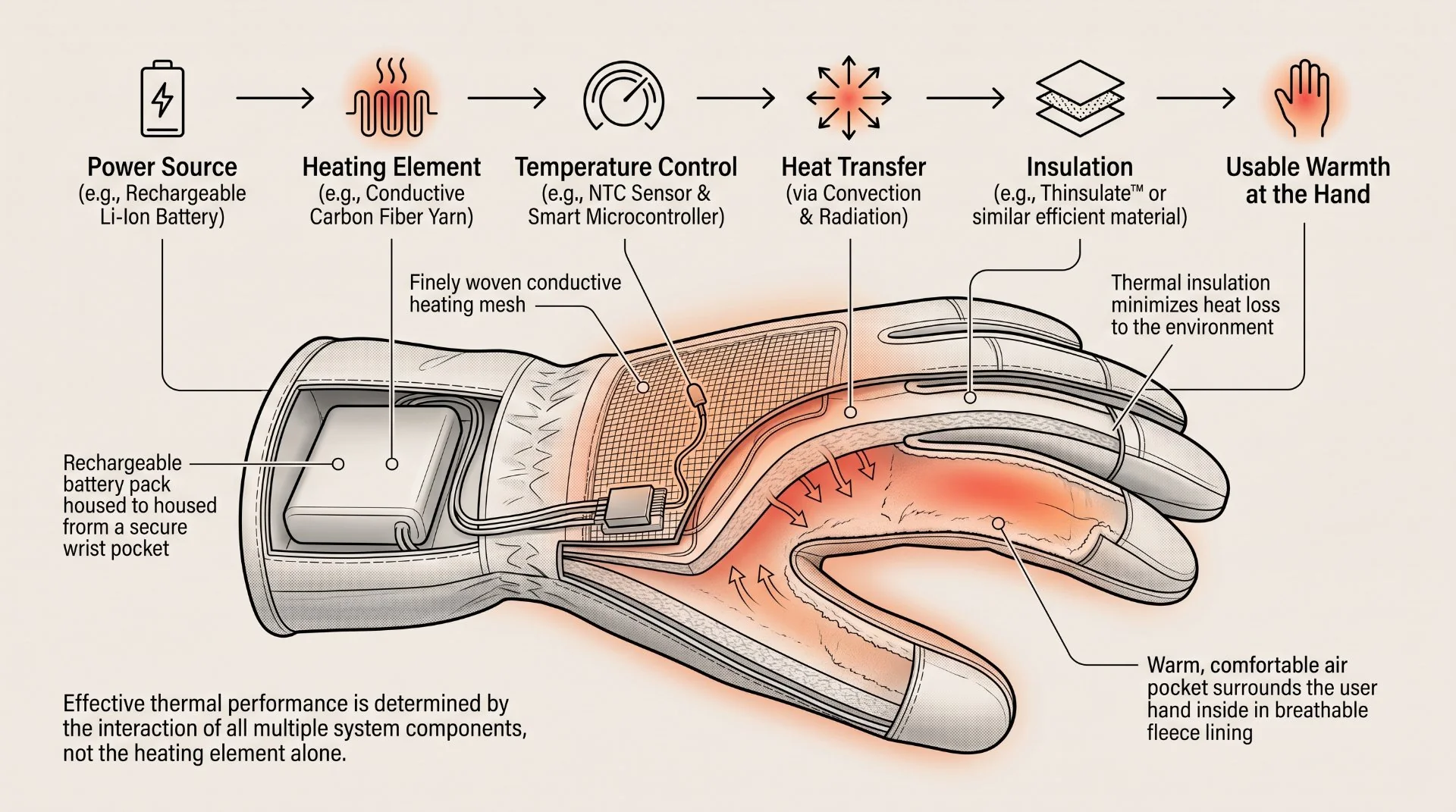
Achieving stable thermal performance requires more than increasing the power of the heating element.
A higher-power element can generate more thermal energy, but the complete system still needs to manage power consumption, heat transfer, insulation, flexibility, control, and the intended operating conditions.
Thermal resistance is one example of why the surrounding structure matters. For a given heat-flow condition, the thermal resistance of a material or construction affects the temperature difference required for heat to pass through it.
This means that two heating systems with similar electrical input can behave differently if their materials, insulation, geometry, or heat-transfer paths differ.
Because the safe operating ceiling places an upper bound on surface temperature, raising the peak alone tends to narrow the usable thermal band rather than widen it. Stability is therefore purchased within a constrained range, not by chasing the highest possible number.
For heated wearable manufacturers, the engineering objective is therefore not simply to maximize heat output. It is to coordinate thermal generation, power delivery, heat transfer, insulation, and control so that the system performs appropriately under its intended conditions.
How Manufacturers Evaluate Sustained Heating Performance
Manufacturers can evaluate a heating system by looking beyond its maximum temperature and examining its behavior over time and under defined test conditions.
Important engineering questions include:
- How quickly does the system reach its intended operating range?
- How consistently can it maintain thermal output?
- How does output change as available battery power changes?
- How does the system respond to increased heat loss?
- How does insulation affect the required thermal input?
- How does the system behave when environmental conditions change?
Defined test conditions are important when comparing thermal performance because measured results can depend on temperature, dimensions, heat flow, materials, and the measurement method.
Consequently, a maximum temperature number without its test conditions provides limited information for comparing complete heating systems.
For the electrical side of this evaluation, battery voltage, output, and runtime also need to be considered as a system rather than as isolated specifications. The related framework is covered in Battery Voltage, Output, and Runtime: A System-Level View.
Heating Output and Insulation Work Together
Active heating and insulation perform different functions.
Active heating adds thermal energy to the system. Insulation changes the rate at which heat is transferred away from the warmed area.
Increasing insulation can change how much generated heat is retained, but insulation does not create thermal energy. Conversely, increasing heating output does not automatically compensate for every source of heat loss.
This is why heating coverage, insulation, power, and thermal control need to be considered as parts of the same system.
Temperature regulation is another part of this system-level problem. The relationship between control strategy and thermal stability is explored further in Temperature Control in Heated Wearables: Engineering Stability.
What This Means for Heated Glove Engineering
The most useful engineering question is not simply how high the temperature can go.
It is whether the heating system can provide an appropriate and controlled thermal output for the conditions and duration for which it is designed.
Peak temperature is one operating characteristic. Sustained output, thermal stability, power management, insulation, heat-transfer conditions, and environmental load determine how that characteristic translates into system behavior.
J ONE understands that sustained output at a controlled temperature is more useful than peak temperature for cold-sensitive wearables, and that stability is a control-design property.
For heated wearable manufacturers, this makes stable thermal performance a system-level engineering problem rather than a race to achieve the highest possible temperature.
Frequently Asked Questions
How do heated gloves work?
Heated gloves use electrical energy to generate thermal energy through heating elements integrated into the glove. The resulting thermal performance also depends on power delivery, control, materials, insulation, heat transfer, and environmental conditions.
Is peak temperature the same as heating output?
No. Peak temperature describes the temperature reached by a component or surface under a particular condition, while heat output describes the rate at which thermal energy is delivered.
Why can sustained heat matter more than maximum temperature?
During extended cold exposure, sustained output describes what the heating system can continue delivering over the required operating period. Peak temperature describes an operating point, so the two measurements answer different engineering questions.
Does a more powerful heating element always provide better performance?
Not necessarily. A higher-power element can generate more thermal energy, but complete system performance also depends on power management, heat transfer, insulation, control, materials, and the intended operating conditions.
What can cause heated glove thermal performance to change during use?
Thermal performance can change with battery state, surrounding temperature, airflow, contact with cold objects, user movement, insulation, material structure, and the control strategy used by the heating system.