

Introduction
Wearable heating systems are electrically powered textile systems that generate controlled heat through embedded conductive materials. Unlike traditional winter clothing that relies on insulation to retain body heat, these systems actively produce thermal energy to stabilize body temperature in cold environments.
These systems are typically built into gloves, socks, jackets, and insoles, and are powered by low-voltage rechargeable battery packs.
System Architecture
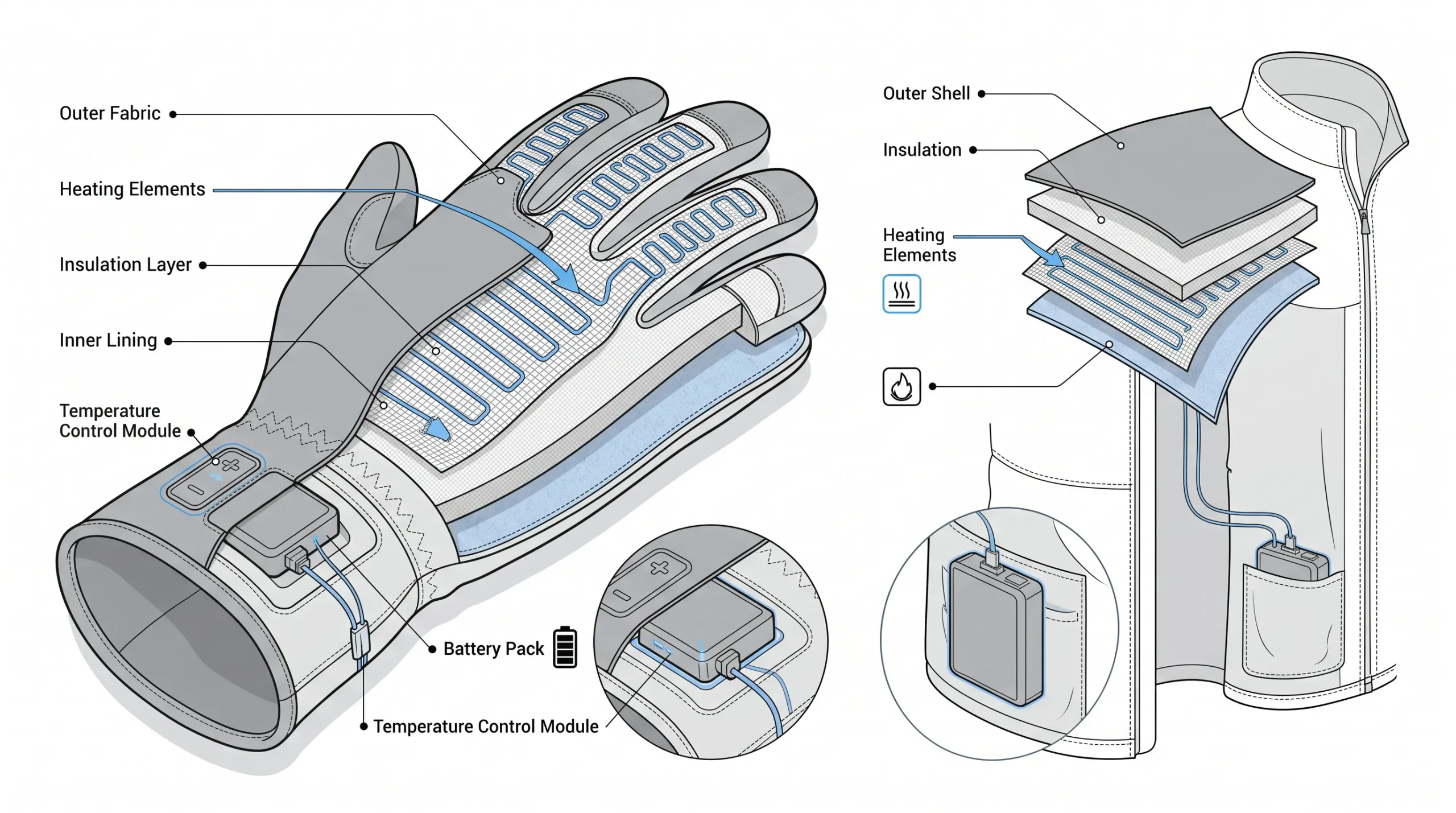
A wearable heating system consists of five core components working in sequence:
- Battery pack: Lithium-ion power source providing stable low-voltage output
- Control system: Regulates temperature levels (low / medium / high) and prevents overheating
- Heating elements: Carbon fiber or metal conductive wires generating heat through electrical resistance
- Thermal diffusion layer: Spreads heat evenly across target zones and prevents hot spots
- Insulation layer: Reduces heat loss and improves system efficiency
Working Mechanism
The system operates through a controlled energy conversion chain:
Battery → Control module → Heating element → Thermal diffusion layer → Fabric surface → Skin microclimate
Step-by-step process:
- Battery supplies stable low-voltage DC power (typically 5V or 7.4V)
- Control system adjusts output intensity based on user-selected heating modes
- Heating elements convert electrical energy into heat through Joule heating (P = I²R)
- Thermal diffusion layer distributes heat across textile structure
- Fabric interface stabilizes surface temperature for consistent comfort
Temperature regulation prevents overheating and optimizes battery efficiency through pulse or continuous output modes depending on system design.
Passive vs Active Heating
| Feature | Passive Insulation | Active Heating |
|---|---|---|
| Heat source | Body-generated heat only | Electrical energy |
| Energy behavior | Retains existing heat | Generates new heat |
| Wind resistance | Performance drops in wind | Stable output |
| Moisture impact | Insulation efficiency reduced when wet | No direct impact |
| Long exposure | Gradual heat loss | Stable thermal maintenance |
| Use condition | Mild winter, short duration | Cold, long exposure |
Key distinction: Passive systems slow heat loss; active systems actively replace lost heat energy.
Use Cases
- Extended outdoor exposure in cold climates
- Winter sports (skiing, snowboarding)
- Motorcycling and high wind environments
- Industrial cold storage operations
- Users with reduced peripheral circulation
- General wearable thermal regulation systems
System Limitations
- Requires battery management and charging cycles
- Adds weight compared to non-heated garments
- Performance depends on external insulation quality
- Runtime limited by battery capacity and heating intensity
Decision Insight
Wearable heating systems are most effective when environmental heat loss exceeds the body’s ability to maintain thermal equilibrium.
They function as a supplementary thermal energy system rather than a replacement for insulation, especially under sustained cold exposure conditions.
class=”jone-faq”>
FAQ
What is a heating system in wearable clothing?
A heating system integrates heating elements, power supply, and controls into clothing for active temperature management.
What components make up a heating system?
Key components include heating elements, batteries, controller, and thermal insulation for heat retention.
How do heating systems maintain temperature?
Controllers regulate power to heating elements, maintaining consistent temperature through thermostatic control.